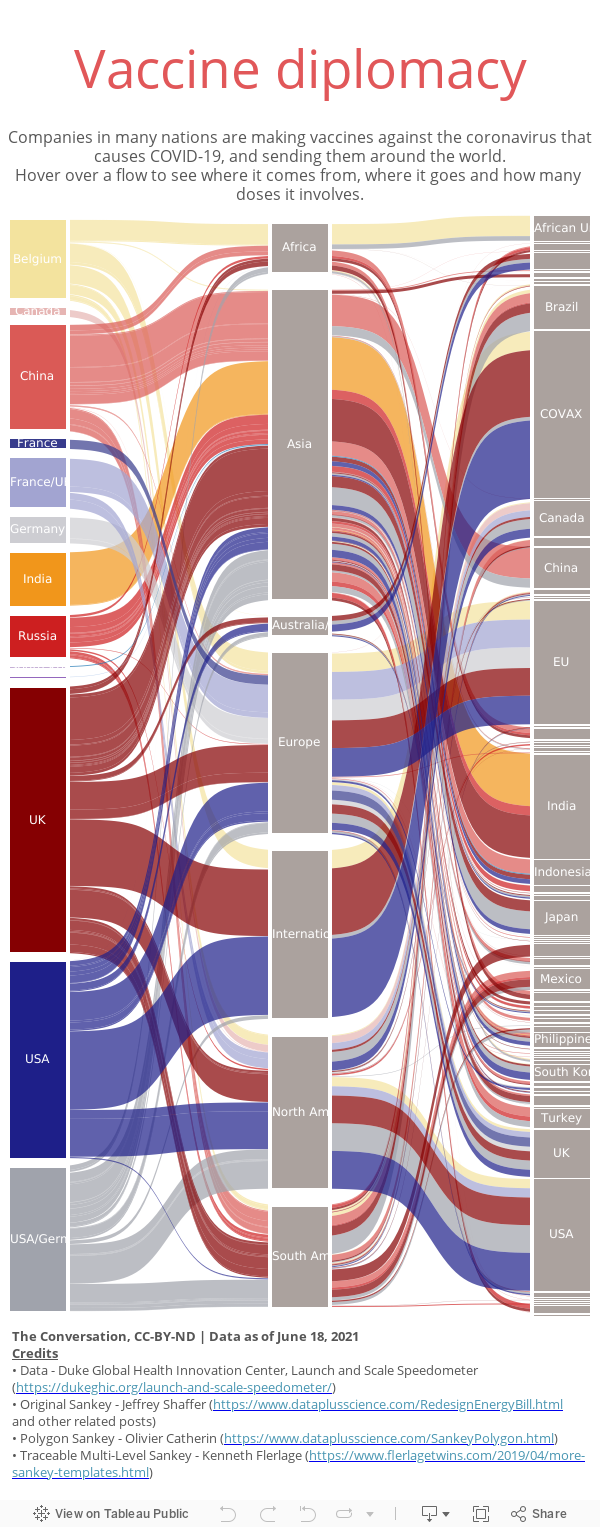
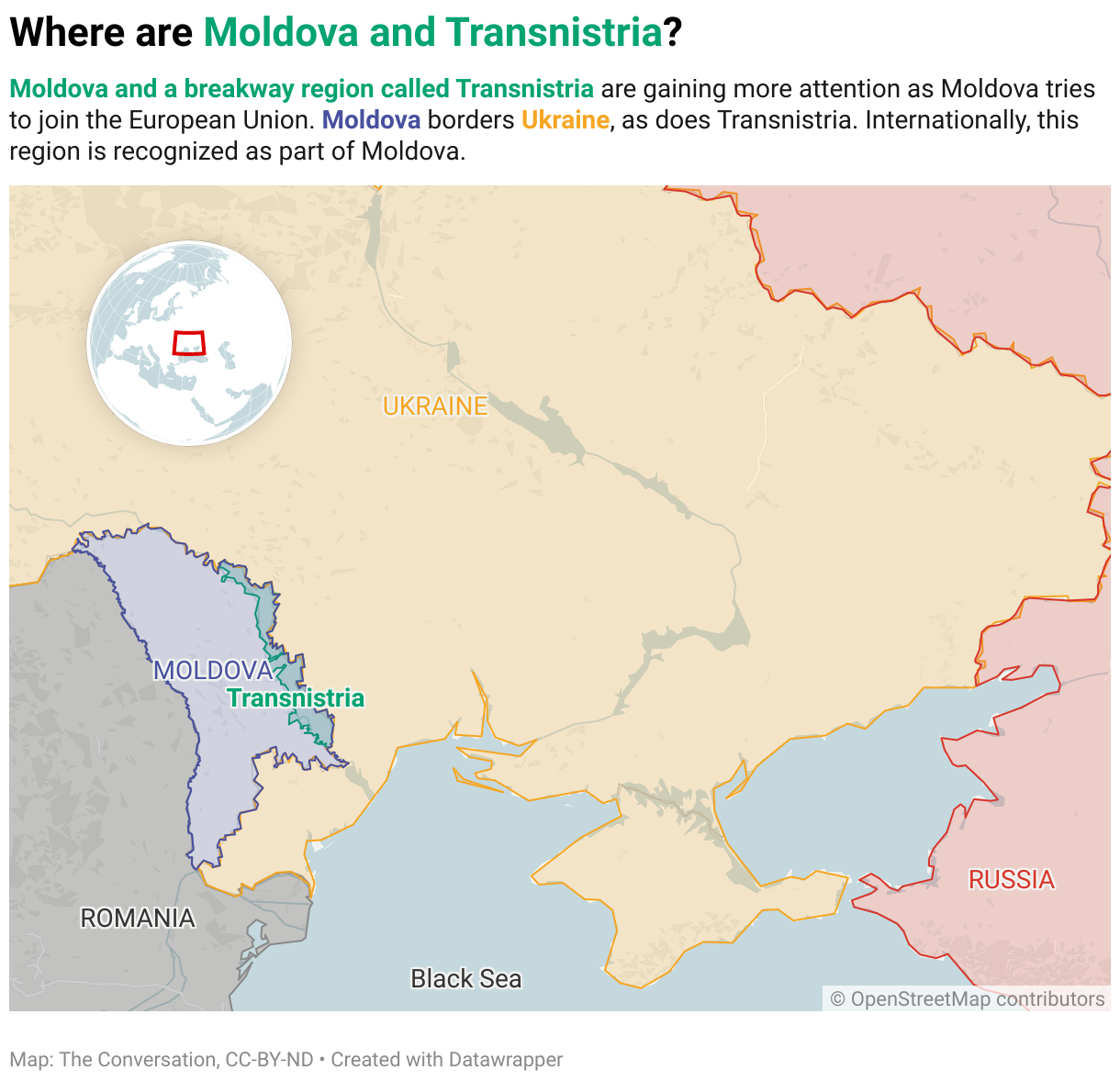
My favorite visualizations are those that reveal something otherwise hidden or hard to see -- and I've found ways to do that with bar and area charts, Gantt charts, Sankey charts, and various types of maps. It's also very important to me to use the capabilities of online visualizations to provide additional context and data, beyond the initial message of the viz, for those who wish to dig deeper. So please mouse over and click on the vizzes below to see what else is there!
My data visualizations portfolio
I've worked with Flourish, Tableau and Datawrapper. I enjoy exploring the options each platform has to offer for visualization, as well as their different preferences for editing the available data into a useful presentation. Here are some sample visualizations I've created with each of those platforms.
Freelance editor and data wrangler available
I am accepting new clients from journalism organizations and media outlets, academic institutions, independent scholars and writers, and others in need of writing coaching, editing, data analysis and visualization, proofreading and other services to support getting your ideas out to the public.
FREELANCE EDITOR | Dec. 2021 - present
- Clients include: The Conversation, Harvard T.H. Chan School of Public Health, MIT Technology Review Insights, The Emancipator (Boston Globe/Boston University joint venture), among others.
- Distill data and technical language into clear prose and compelling visualizations accessible to a general audience.
SCIENCE + TECHNOLOGY EDITOR | Jan. 2016 - Sept. 2019
- Worked with university academics and researchers to translate their scholarship and insight into timely news articles for a general audience, distributed by the Associated Press and Creative Commons republishing.
- Key topics included social media and democracy, election integrity, U.S. civics, disinformation and information warfare, history, human rights, understanding extremism.
- Staff point person for data visualization, including interactive maps, charts and other web-native diagrams.
POLICY ANALYST | Frontier Group, Boston, Massachusetts | March 2014 - Jan. 2016
- Researched and wrote data-driven analytical reports on a wide range of topics, including water pollution, child poverty, transportation spending.
MANAGING EDITOR | Portland Phoenix, Portland, Maine | Dec. 2005 - Jan. 2014
- Led Maine's only alternative weekly newspaper and its writers to multiple awards from the New England Press Association and the Association of Alternative Newsweeklies, in categories including investigative reporting, government reporting, health coverage, reporting on religious issues, and sports reporting.
- Built and coordinated a team of two full-time editorial staffers (a staff writer and a listings coordinator) as well as a regular stable of nearly two-dozen freelancer writers, illustrators, and photographers to produce a must-read publication in Maine's largest city.
- Collaborated with the design and production team to publish eye-catching covers, and easy-to-read layouts.
- Reported news, feature, investigative, and analysis stories on important issues of the day, such as privacy, telecommunications, foreign policy, state and national politics, and local community, arts, and business issues.
- Wrote a monthly column on media issues, covering local and national developments in business practices, ethics, journalism, and related subjects.
- Created, organized, and managed supplements (e.g., Best of Portland, Summer Guide, Student Survival Guide) and niche publications (Style magazine, Out In Maine).
- Executed budget responsibility for all editorial salaries, freelance payments, and expenses.
- Helped plan and then hosted must-attend special events drawing hundreds of people to Portland venues to celebrate the city's music scene and business environment; participated in community activities and discussions on topics including arts and politics.
EDITOR | The Current, Scarborough, Cape Elizabeth, South Portland, Maine | Feb. 2004 - Nov. 2005
ASSISTANT EDITOR | Sept. 2002 - Feb. 2004 | STAFF REPORTER | Sept. 2001 - Sept. 2002
- Ran a community weekly in a very competitive environment, facing two other weeklies and a daily, while leading writers to regional and statewide awards.
- Reported and wrote independent enterprise and investigative stories; covered local schools, government and elections, police, and courts; took photos to accompany stories. My own work also won honors from the New England Press Association and the Maine Press Association, in categories including Freedom of Information, investigative reporting, spot news, and sports feature.
- Wrote editorials on topics of local relevance and interest (as editor and assistant editor).
- Coordinated implementation of new online-print hybrid copy-flow system.
- Spoke at civic organizations' events; participated in community forums and discussions.
FREELANCE WRITER | various publications, Portland, Maine | July 2001 - June 2004
- Portland Phoenix | Weekly theater reviews, occasional news and feature stories | November 2002 - June 2004
- Interface Business News | News stories pertinent to Maine businesses | January 2002 - October 2003
- PortCity Life | Travel, automotive, technology, and feature stories | July 2001 - July 2003
- Interface Tech News | News stories about technology and tech-sector companies | July 2001 - July 2002
EDITOR | Antarctic Sun, McMurdo Station, Antarctica | Oct. 1999 - Feb. 2000, Oct. 2000 - Nov. 2000
- Reported, photographed, wrote, and edited news and feature stories relating to the US Antarctic Program, a broad range of scientific research, life and work in Antarctica, international relations, and logistics.
- Coordinated with transportation and research staff, as well as National Science Foundation executives, on coverage and resource allocation.
- Worked with volunteer contributors from other stations and field camps to get information about their activities and distribute the paper to them.
- Designed, built, and maintained the paper's first website.
- Contributed to The Antarctic Photo Library of stock images of Antarctica.
- Earned the Antarctica Service Medal, the only US military award also bestowed upon civilians.
ADDITIONAL WORK
- Drug Discovery News, Rocky River, Ohio | News contributor | February 2014 - April 2014
- Portland Phoenix, Portland, Maine | News, features, and columns contributor | January 2014 - April 2014
- Global Post, Boston, Massachusetts | News and features contributor | November 2013 - May 2014
- Money, New York, New York | Contributor to "Best Advice" series | July 2013
- The Photo Life, Atlanta, Georgia | Interviews and blog posts about the lives and work of professional photographers | September 2012 - February 2013
- National Geographic Adventure, Washington DC | Feature on travel to Portland, Maine | August 2005
- IPI Global Journalist, Columbia, Missouri | Feature on freedom of the press in Antarctica | July 2002
- The Antarctic Sun, McMurdo Station, Antarctica | Features on life and work on station | December 2000 - February 2001
- The Addison County Independent, Middlebury, Vermont | Feature, news, enterprise, analysis, and photography for a twice-weekly community newspaper | April 2000 - August 2000, June 1998 - August 1998 | Webmaster | November 1996 - February 2001
- North & South, Auckland, New Zealand | Feature on Buddhist monastery outside Wellington | November 1999
- Otago Daily Times, Dunedin, New Zealand | News about a planned development in a small vacation community | July 1999
- IRE Journal, Columbia, Missouri | How-to article on investigative research using the Internet | November 1997
EDUCATION
- University of Missouri - Columbia | Master of Arts in Journalism | August 1997 - December 2000
- Pulitzer New Media Scholar | August 1997 - May 1998
- Middlebury College, Vermont | Bachelor of Arts in History | August 1991 - May 1995
- University College, Cork, Ireland | course work in History | August 1993 - May 1994
PROFESSIONAL MEMBERSHIPS
- Society of Professional Journalists | August 2005 - present
- President, Maine Pro Chapter | 2008 - January 2014 | Vice-President | 2007
- Helped draft and pass Maine's first shield law for journalists.
- Submitted testimony (oral and written) to the Maine Legislature on issues relating to freedom of information and freedom of the press; coordinated legislative action with like-minded organizations around the state and nation.
- Investigative Reporters and Editors | August 2005 - present
- National Press Photographers Association | August 2005 - March 2019
- Maine Freedom of Information Coalition | June 2006 - January 2014
- National Association for the Self-Employed | August 2001 - January 2014
Available to support non-fiction writers, authors, journalists and more
I'm a pretty busy person, working full-time and spending time with family. But if you have a project that needs my help on a freelance basis, I'd be glad to hear from you!
My award-winning journalistic experience is available to non-fiction writers looking for assistance with their own projects, and as a supporting contractor for media organizations looking to expand the services they offer.
If you require research, interviewing, fact-checking, I can help.
If you require structural editing, organizational editing, copy editing or proofreading, I can help.
If you require data manipulation, analysis and visualization, I can help.
I specialize in non-fiction work; I've spent more than 20 years as a staff and freelance journalist for publications around the world. You can see my work in my clip file, which is complete from 2006 to the present, and increasingly complete as I add material from 2005 and before.
Please contact me by email or phone to arrange for my assistance on whatever project you have in mind!
My award-winning journalistic experience is available to non-fiction writers looking for assistance with their own projects, and as a supporting contractor for media organizations looking to expand the services they offer.
If you require research, interviewing, fact-checking, I can help.
If you require structural editing, organizational editing, copy editing or proofreading, I can help.
If you require data manipulation, analysis and visualization, I can help.
I specialize in non-fiction work; I've spent more than 20 years as a staff and freelance journalist for publications around the world. You can see my work in my clip file, which is complete from 2006 to the present, and increasingly complete as I add material from 2005 and before.
Please contact me by email or phone to arrange for my assistance on whatever project you have in mind!
On the hunt
It's official. I've finished my time at the Portland Phoenix, which has been a fantastic eight-plus years, and I'm looking forward to the next chapter of my personal and professional life.
I'm casting a wide net, for full-time, contract, and freelance work relating to journalism, editing, and research. I'll post more here soon, but in addition to regular freelance journalism for general-interest, alternative, and trade publications, I'm interested in helping with book projects, as an additional researcher, interviewer, fact-checker, proofreader, or editor for those authors who don't have the kind of support from their publishers as used to be more common.
Please get in touch with me to talk about how I can help you!
I'm casting a wide net, for full-time, contract, and freelance work relating to journalism, editing, and research. I'll post more here soon, but in addition to regular freelance journalism for general-interest, alternative, and trade publications, I'm interested in helping with book projects, as an additional researcher, interviewer, fact-checker, proofreader, or editor for those authors who don't have the kind of support from their publishers as used to be more common.
Please get in touch with me to talk about how I can help you!
Unified look and feel!
Hooray! I've managed to figure out how to get three blogs to appear a lot like they're different parts of the same one. Same color palette was easy, subdomains were a little more complicated, and getting all the widgets organized properly was rather a pain - but I managed.
I also have created a new blog, for my portfolio - those stories and photos that are of particular interest, or of which I'm particularly proud. The full clip archive will still be intact, and I'm still working away at getting that stuff all posted. (It'll be a while yet.)
But I realized while doing that work that I need an organized way to store the special pieces, and the solution was obvious: another free blog!
I'll get that going here shortly too.
I also have created a new blog, for my portfolio - those stories and photos that are of particular interest, or of which I'm particularly proud. The full clip archive will still be intact, and I'm still working away at getting that stuff all posted. (It'll be a while yet.)
But I realized while doing that work that I need an organized way to store the special pieces, and the solution was obvious: another free blog!
I'll get that going here shortly too.
Cooking along
Well, I'm still cooking along. I've managed to locate most of the stuff I need to put in the online clip file, and am now in the process of entering it - copying-and-pasting in the case of digital files, or typing it in, for those many files I don't have electronically.
I've also been exploring the joys of live Twittering newsworthy events. More on all this as I keep at it!
I've also been exploring the joys of live Twittering newsworthy events. More on all this as I keep at it!
Still plugging away
Hello!
I'm still plugging away at uploading my old site's content to this new site, as well as compiling an electronic clip file of as many of my articles as I can track down and get in the system. That, in particular, is a time-consuming process, but I have more than 400 articles up, including everything I've written for the Phoenix (both as a freelancer and since joining the staff full-time) and a bunch of other stuff. I'm tagging them with the publication names, and posting them on their publication dates, so you can have a little retrospective of what I've been up to. There's still a lot to do, and I really want to get the old stuff posted and the clip file completed before I spend more time doing other things. But please keep checking back!
UPDATE 2/24: With the inspiration of WritingRoads, and the amazing help of ThreeColumnBlogger, I've updated the look a little bit, with the left column for entries, the middle one for professional and blog-navigation stuff, and the right column for social-networking information.
I'm still plugging away at uploading my old site's content to this new site, as well as compiling an electronic clip file of as many of my articles as I can track down and get in the system. That, in particular, is a time-consuming process, but I have more than 400 articles up, including everything I've written for the Phoenix (both as a freelancer and since joining the staff full-time) and a bunch of other stuff. I'm tagging them with the publication names, and posting them on their publication dates, so you can have a little retrospective of what I've been up to. There's still a lot to do, and I really want to get the old stuff posted and the clip file completed before I spend more time doing other things. But please keep checking back!
UPDATE 2/24: With the inspiration of WritingRoads, and the amazing help of ThreeColumnBlogger, I've updated the look a little bit, with the left column for entries, the middle one for professional and blog-navigation stuff, and the right column for social-networking information.
A brand-new day!
Welcome to the all-new JeffInglis.com!
My last Web site hadn't been updated since some time in 2001, I think (I'd made the odd change here or there, but nothing truly substantive). So really it was long past time. I've posted most of the stuff that was hiding around my old site - but it's much easier to find. There are still a few things needing posting from back then - mostly stuff from my time in New Zealand in 1999.
After that, I'll start posting new stuff. In the meantime, I've put a bunch of links to other social media (Twitter, Facebook, Google Reader, LinkedIn, Digg, Delicious) over on the sidebar, so check out those links too!
And you can subscribe for updates as I post them, too - just click the "Subscribe for updates" link on the right.
My last Web site hadn't been updated since some time in 2001, I think (I'd made the odd change here or there, but nothing truly substantive). So really it was long past time. I've posted most of the stuff that was hiding around my old site - but it's much easier to find. There are still a few things needing posting from back then - mostly stuff from my time in New Zealand in 1999.
After that, I'll start posting new stuff. In the meantime, I've put a bunch of links to other social media (Twitter, Facebook, Google Reader, LinkedIn, Digg, Delicious) over on the sidebar, so check out those links too!
And you can subscribe for updates as I post them, too - just click the "Subscribe for updates" link on the right.
Photo - prints for sale
All photos on this page © Jeff Inglis
Several people own 11"x14" prints of these photographs in 16"x20" Exeter Gallery White matting. Print, matting, and mounting materials are all archival quality. If you are interested in finding out who some of these people are, or how you might become one, please drop me a line.
Montserrat (April 2003)
My wife and I got married in March 2003, but we waited until her April school vacation to take our honeymoon. We went to Montserrat, a Caribbean island with an active volcano.
Midd-Sized Model
An interesting insight into Middlebury College's building plan _JI
Vermont's most design-conscious campus hits the wall
BY DONALD KREIS - Seven Days - Dec. 4-11, 2002
Vermont's most design-conscious campus hits the wall
BY DONALD KREIS - Seven Days - Dec. 4-11, 2002
Middlebury College professor Glenn Andres still recalls the day he picked up Robert Venturi at the airport and drove him to campus for a visit. As Andres remembers it, the famous Philadelphia architect-author got out of the car, took one look at the place, and declared: “You have what everyone thinks an American campus looks like but almost never does. It would be very easy to mess this up.”
Nearly $140 million in controversial new construction later, Andres knows better than anyone how right Venturi was. As a professor of architectural history, he is ideally positioned to evaluate how wealthy institutions use their building resources. And, as a part-time member of Middlebury’s facilities planning department, he has been party to the school’s recent architectural decision making.
So, when Andres invited Vermont architects and architecture students to campus last month, more than 100 of them showed up — presumably hoping that Andres and his colleagues would explain some of the recent choices that have transformed Middlebury from the bucolic campus Venturi saw to what it is today. The place is ringed by a series of fortress-like new buildings that seem to suggest Middlebury College is a kind of medieval estate in Addison County. But Andres’ talk was not about feudalism; it was about Middlebury College in a struggle — with its neighbors, with the limitations and challenges of its picture-perfect setting, with its architects and with itself.
Andres is loyal; he said nothing critical about his employer. He simply told his visitors the story that began back in the mid-1980s, when Venturi arrived to interview for the job of designing the College’s new Center for the Performing Arts. Despite Venturi’s memorable assessment of Middlebury’s physical virtues, the commission went to Hugh Hardy of Hardy, Holtzman Pfeiffer Associates of New York.
Hardy looked at the site of the project and instantly fell in love with the building nearby, Le Chateau. So he designed the performing arts center as a tribute to Middlebury’s maison française, mimicking its steep roofline and pinnacled turrets.
But then the college trustees decided that the spot next to Le Chateau was too small; they insisted on moving the whole complex across campus, to a site on South Main Street beside the field house. Since this neighbor is an ugly recycled airplane hangar, contextualism was out of the question. Hardy’s homage to the French renaissance remained, but his design, while rich with architectural meaning and full of luxurious performance spaces, has never functioned as intended. According to Andres, the building has been underused because only the showplaces — theaters, galleries, etc. — were moved across campus, while the classrooms and other traditional facilities were left behind in existing buildings adjacent to the original site.
This debacle got college officials thinking there ought to be more logic governing building choices than the momentary and potentially whimsical preferences of trustees or designers. So they hired an alumnus, David Wallace of Wallace Floyd Associates in Boston, to put together a comprehensive master plan that would guide Middlebury’s future expansion. His first draft was finished in 1995.
Wallace’s plan proposed minimizing impacts, maintaining the campus’s unique qualities, nurturing a close working relationship with the town and preserving views — the latter a particular imperative for a campus with rapture-inducing vistas of the famous mountain ranges to both the east and west. The plan identified an academic and social nucleus around the school’s McCullough Student Center and the adjacent Starr Library, which the College had singled out for a major expansion. All in all, it is a sensible and responsible blueprint.
Unfortunately, Middlebury College has ignored much of what the plan holds dear, validating Venturi’s comment about the ease of messing up a great place.
Down went the College’s ugly and unpopular Science Center, a big hunk of 1960s concrete brutalism that functioned as a giant barrier between Old Stone Row — the three iconic buildings that are the oldest on campus — and downtown. But now, inexplicably, the College is rebuilding the wall, in the form of a $40 million new library designed by New York’s Gwathmey Siegel & Associates.
Middlebury “agonized over this one,” Andres said at his talk last month. The college required Robert Siegel and his colleagues to work through eight different design proposals before settling on the winner, which will present a face to campus that vaguely resembles a round Shaker Barn. To the town, the new library will present two big walls — more varied than the blunt façade of the old Science Center, but walls nevertheless.
Gwathmey Siegel got the job on the strength of a proposal to transform the existing Starr Library by tearing down all but the century-old Beaux Arts core and surrounding it with a curved addition. The Shaker Barn idea made some sense in this context, which would have kept the library right where the master planners thought it should be. But the college’s trustees had other ideas. This led to pitched battles with townsfolk before the Middlebury Planning Board, with neighbors concerned about noise, light pollution and the big box of a building.
The college hosted, and videotaped, a town meeting before Gwathmey Siegel started the design. “The architects took it home and memorized every line of it,” Andres recalled. This speaks well of the architects and the process. But it’s useless if the real decision makers ignore the public input.
A similar scenario unfolded with the Ross Commons complex, designed by Tai Soo Kim Associates of Hartford. The new residential and dining complex, which recently opened on the western edge of campus, ran squarely up against the master plan’s imperative to preserve Adirondack views. Kim thought a transparent glass bridge would work nicely to preserve the views and connect his complex to the existing Ross Commons dorms to the north. But as built, the design brought the bridge down to earth and includes triple-glazed glass that leaves the walkway opaque and wall-like.
Seen from the east, the campus once offered a breathtaking mountain vista punctuated by small buildings. Now, there are just a few feet of open space between the Ross Commons complex and Bicen-tennial Hall — the science building completed for the school’s 200th anniversary in 2000.
The monstrous “Bi Hall” itself has been controversial. With a 215,000 square feet, the building now houses 40 percent of the school’s classrooms. Centralizing so much of a small, traditional liberal arts college in one huge building is the very opposite of the classic, American campus feeling Venturi experienced when he visited. How did this happen?
Andres admitted in his lecture that many — including townsfolk who live within sight of the college’s now-looming western skyline — find the scale of Bi Hall disturbing. Yet the commissioning of such a building was “not because of megalomania,” Andres insisted. The size is purely a function of efficiency, he suggested; separating the functions into a series of smaller structures would have required 25 percent more building.
This echoes the line taken in the Middlebury Magazine, the school’s official organ. The cover story of the Fall 2002 issue concedes that some have blasted Bi Hall for its vastness, but claims that “if critics of the building could hear faculty members talk about how it was designed around their input… their opinions might moderate.” The architects, James Collins and Bob Schaeffer of Payette Associates in Boston, “stood out precisely because of a willingness to meet real needs rather than displaying an egoistic insistence on an aesthetic concept,” the magazine noted.
But sometimes, architectural egotism is precisely what is needed. A good architect will listen carefully when meeting with the prospective users of a new building — like Bi Hall’s faculty denizens. But this same architect ought to be outspoken and persistent when dealing with out-of-town trustees who are inclined to wield their checkbooks in favor of choices that are harmful or arbitrary — such as placing a big building right at the crest of a hill.
Finally, egotism in architects is well worth suffering by clients like Middlebury College. Hugh Hardy may or may not be more egotistical than his counterparts at Payette, but his Center for the Performing Arts is intriguing and beautiful. Payette’s Bi Hall is an unsightly parody of the signature Greek Revival façade of Old Chapel, flanked by wings of repetitive windows and granite that are more evocative of a prison than a college.
Design divisiveness in Middlebury is not restricted to campus. This spring, Middlebury’s voters said no to a plan to move their cramped Town Hall out of downtown and into the strip-mall district south of the village on Route 7. The College had offered to donate the new site and to buy the old one for $3 million. It had hoped to tear down the old Town Hall, which occupies a wedge of land between College and South Main streets just at the edge of the school’s property and replace it with a lawn and a “Middlebury College” sign. In a protracted stand-off fraught with symbolism, locals turned the trustees down.
This is not just a town-gown problem; the conflict over how the campus should grow and change also rages within. The Ross Commons project, for example, is an ambitious program to transform the school into five residential communities and thereby move Middlebury away from its historic fraternity-based social life. So far, the effort at social engineering has inspired skepticism.
“Student reaction,” the Middlebury Campus student newspaper editorialized this fall, “remains complicated and, in some cases, very negative.” According to the paper, there is an “artificial air” to these communities, with students migrating from commons to commons in search of the best accommodations.
If the students are behaving like real-estate shoppers, perhaps it is because they must part with $39,500 for a year of college. That price tag may also explain why the new dining hall at Ross Commons resembles a restaurant, with curved ceilings of locally harvested wood, next to an indoor dorm-to-dining walkway. Where once the College could simply assume it was attracting students who enjoyed the outdoors, even in cold weather, now it apparently feels obliged to offer resort-type amenities.
Middlebury’s architectural ambivalence rears itself in another, less obvious, sense. In organizing an effort to engage Vermont architects in dialogue about the College, Andres clearly understands that such discourse is more than just good public relations; it can ground the College’s architectural choices in more indigenous sensibilities. But he could not coax the real decision makers — people like Executive Vice President for Facilities Planning David Ginevan, College President John McCardell or any of the trustees whose veto power is paramount — into participating.
There’s one positive sign. The next big residential-dining project, Atwater Commons, is rising behind Le Chateau. The site is actually designated in the master plan as appropriate for such expansion. Designed by Kieran Timberlake Associates of Philadelphia, this might be the best example of architectural art at Middlebury College since the Greek Revival of the 1820s.
The two dorm buildings frame the back of the Chateau, but in a gently non-symmetrical manner that responds to the topography. In form, these buildings pay tribute to the oldest building on campus, the beautifully austere Painter Hall, adding a syncopated window pattern that is distinctly contemporary. Adjacent, but not connected by an indoor walkway, is a delightfully radical exclamation point of a building — an oval dining hall, surrounded by what Andres calls “corrugated windows” and capped with a sod roof. This design strives to blur the distinction between the building and its earthly setting.
If Middlebury College keeps building such structures, critics might be silenced. Good architecture speaks for itself.
Donald Kreis, an attorney who writes frequently about architecture, graduated from Middlebury College in 1980.
Thailand, Nepal, and India (March-April 2001)
In March 2001, I arrived in Thailand for my first visit to Asia. I stayed only a few days in and around Bangkok, and took a day trip to Ayutthaya, a nearby city which is a former capital of Thailand and the site of many ruined temples.
I then flew up to Kathmandu and went for a trek in Sagarmatha National Park, around Mount Everest. After my trek and meeting up with some friends in Kathmandu, I traveled to India overland, crossing the border at Sonauli, and headed on to Agra.
I visited the Taj Mahal, a Krishna consciousness (Hare Krishna movement) ashram near Agra, Delhi, Dharamsala and McLeod Ganj, and Chennai (Madras), where some friends were living and working.
It was a challenging trip, probably the hardest since my very first, in Ireland. I learned a lot and had a lot of fun, and didn't escape the truly south Asian experiences of violent illness, deception and frustration. Here are some of the pictures I made during this two-month adventure into the unknown.
Thailand:
Nepal:
India:
Zenith: a few more days left!
Hello again, intrepid readers of my very intermittent newsletter!
All is well here on the Ice - the season is winding down. The fuel ship has been and gone and the next ship in will carry Dad, who will be in town here for only a few hours before departing and continuing the cruise he's on to various historic sites around this side of Antarctica...
I'll be heading north to NZ sometime around Feb. 9. Nobody has left on schedule yet, but the high-capacity C-141 flights begin on Feb. 1, so that might pick things up a bit...
After that I'll be around NZ for a while before heading to Thailand, Nepal and India for March and April. It remains to be seen how much time I'll spend in each country, but I'm looking forward to the trip! I'm planning to visit a few friends in various places, if the timing works out...
I'm expecting to be back to the U.S. in the very early part of May, and I'll be in Vermont for a little while and then will be moving to Portland, Maine if all goes well! Many experiments in journalism await in Portland, from radio to a book project to more freelancing and who knows what else?
It's been great to make a few new friends down here, and to think about running into them in all sorts of crazy places around the globe in months and years to come...
I hope you're all well as January comes to an end! Write when you get a chance!
Love, Jeff
Scotland & Ireland (Aug-Sept 2000)
From the middle of August to the middle of September I went to Ireland to see friends and explore that part of the world, in which I feel so much at home.
I found much had changed, but much abided. Everyone had a mobile phone, and cars were newer. But even so, history was still present in the air and on the earth. Here are a few of the pictures from the trip.Scotland:
Ireland:
Zenith: Home a month now...
...and no, I'm not ready to head back on the road just yet!
I've been to Boston and New Jersey for a weekend each - good to see family and get out a bit, but on my way back to Vermont this past Sunday, I was exhausted and tired of driving...
Being home is wonderful. Spring looks like it might finally stick around for its customary week, before summer begins, and the daffodils are up and the lake level is going down!
I'm working three days a week at the Addison Independent, the local newspaper, wearing my usual multiple hats - writer, photographer, techie, web guy, and so on. It's good fun, and they are (as always) great folks to work with!
I'm also thinking a lot of my friends still on the Ice (or, in the case of Mo and Kirsten, back for a quick visit to Palmer) and hoping they're doing well as darkness sets in... Send a thought their way if you would - they're great folks, and they're undertaking an amazing personal challenge. As oblivious as the Ice mindset may be to the world, it always comforted me a little bit to know that the World did carry on...
I've been reading a whole heck of a lot, and I've really enjoyed several of the books, so here's a quick trip through three of them, if you're interested!
1. Sun Dancing, by Geoffrey Moorhouse (Harcourt, Brace: 1997). My sister and her boyfriend gave this to me for "Christmas in April," along with a great David Wilcox CD called East Asheville Hardware... It's about life in the monastery on Skellig Michael, a rock off the west coast of Ireland, in the early Middle Ages. The life those men led was amazing - puts the Ice into context of sorts - and was fascinatingly well-research and well-written. Lots to learn about Ireland, religion, and life in tough places...
2. Following the Brush, by John Elder (Beacon, 1993). John is a good friend of mine and was a professor of mine at Middlebury, where he still teaches. He and his family took off to live in Japan for a year, with his kids enrolled in Japanese schools, and everything. It's an incredible story of learning and cultural interchange, told in John's soft, insightful and deeply personal tone. His interaction with nature and the Japanese ideal of nature are particularly fascinating, as are his relations of daily life in a truly foreign place, which, no matter how friendly, is still far from home.
3. Consilience, by Edward O. Wilson (Abacus, 1998). One of those books I saw in about 10 bookstores before I finally just bought it. Jane will like this one in particular - it'll make her think about how science and humanity coexist and the interrelationships between all things, from subatomic particle to universe. A search for a "theory of everything," Consilience looks to unite history, philosophy (including political philosophy, Heather!), science, and other disciplines into a cohesive view of the world as it truly is. A scientist in search of a Buddhist ideal is rare, and it's interesting, It took a whole heck of a lot of brainpower to move through, though, so be ready to work when you pick it up!
That's all for now - be well, and write when you get a chance!
Love, Jeff
Antarctica (Oct 1999-Feb 2000)
I deployed to McMurdo Station, Ross Island, Antarctica from Christchurch, New Zealand, in mid-October 1999.
I did some exploring around McMurdo and got to take a trip to Cape Roberts, where there's a science project drilling deep into the sea floor looking for climate data.
I met some very cool folks, and saw some of the historical sites of the Ross Island area.
The paper I worked for is The Antarctic Sun.
Summary of New Zealand 1999
I drove all over New Zealand during 1999 in the company of hawks, which the Maori call Kahu. Here are a couple of images they have let me make of them; indeed I wouldn't have photographed them at all if I hadn't felt them ask me to.


This map is pretty much complete, but doesn't include my brief side trip to the bottom of the Coromandel peninsula:


This map is pretty much complete, but doesn't include my brief side trip to the bottom of the Coromandel peninsula:

Albert Town, near Wanaka, South Island, New Zealand
I showed 11 pictures to 6 residents of Albert Town to get their feedback, and to learn more about Albert Town than I might otherwise in in-depth interviews.
 Templeton and Son, the garage, smithy, and engineering shop.
Comments by Moira Fleming
 Alison Hebbard, Bruce Hebbard, and Rae Benfell on the day Bruce and Alison were clearing the section next to Rae's, on which their parents will build a home.
 A view down Kingston Street in lower Albert Town, looking towards the old building at the bottom of the street.
Comments by Moira Fleming
 Moira Fleming, right, answers a question posed by Henry Dickey, left.
Comments by Ida Darling
Comments by Moira Fleming
 The monument and tree in the Albert Town cemetery.
Comments by Ida Darling
 The sign and the riverfront.
Comments by Moira Fleming
Comments by Maxene Cranston
 The road counter at Dale Street.
Comments by Moira Fleming
 Community association members voting on having a Christmas party, during the midwinter potluck in June.
Comments by Moira Fleming
Comments by Ida Darling and Phyllis Spraule
 Logan Hebbard watches his son, Bruce, clear the land where Logan and his wife will build a home.
Comments from Ida Darling
I chose the 11 images for various reasons. Each picture has a brief caption and some comments about it from Albert Town residents.
Moira Fleming on Albert Town's history:

Peter Cross, foreground, fixes a broken shed, with the help of Harry Dickey.
Comments by Moira Fleming

Looking toward the poplars on the Cardrona riverbank.
Comments by Rae Benfell
 Templeton and Son, the garage, smithy, and engineering shop.
Comments by Moira Fleming
 Alison Hebbard, Bruce Hebbard, and Rae Benfell on the day Bruce and Alison were clearing the section next to Rae's, on which their parents will build a home.
 A view down Kingston Street in lower Albert Town, looking towards the old building at the bottom of the street.
Comments by Moira Fleming
 Moira Fleming, right, answers a question posed by Henry Dickey, left.
Comments by Ida Darling
Comments by Moira Fleming
 The monument and tree in the Albert Town cemetery.
Comments by Ida Darling
 The sign and the riverfront.
Comments by Moira Fleming
Comments by Maxene Cranston
 The road counter at Dale Street.
Comments by Moira Fleming
 Community association members voting on having a Christmas party, during the midwinter potluck in June.
Comments by Moira Fleming
Comments by Ida Darling and Phyllis Spraule
 Logan Hebbard watches his son, Bruce, clear the land where Logan and his wife will build a home.
Comments from Ida Darling
Subscribe to:
Posts (Atom)